A champion does not always arrive looking like a champion.
Sometimes it arrives at a sale with an awkward body, an unimpressive record or a price tag that barely attracts attention. Sometimes trainers question whether it will ever make it to the highest level. Sometimes the horse itself seems determined to prove everyone wrong.
And then, one day, the barriers open.
The horse nobody wanted is suddenly running past horses that cost many times more.
That is the magic of the racing underdog.
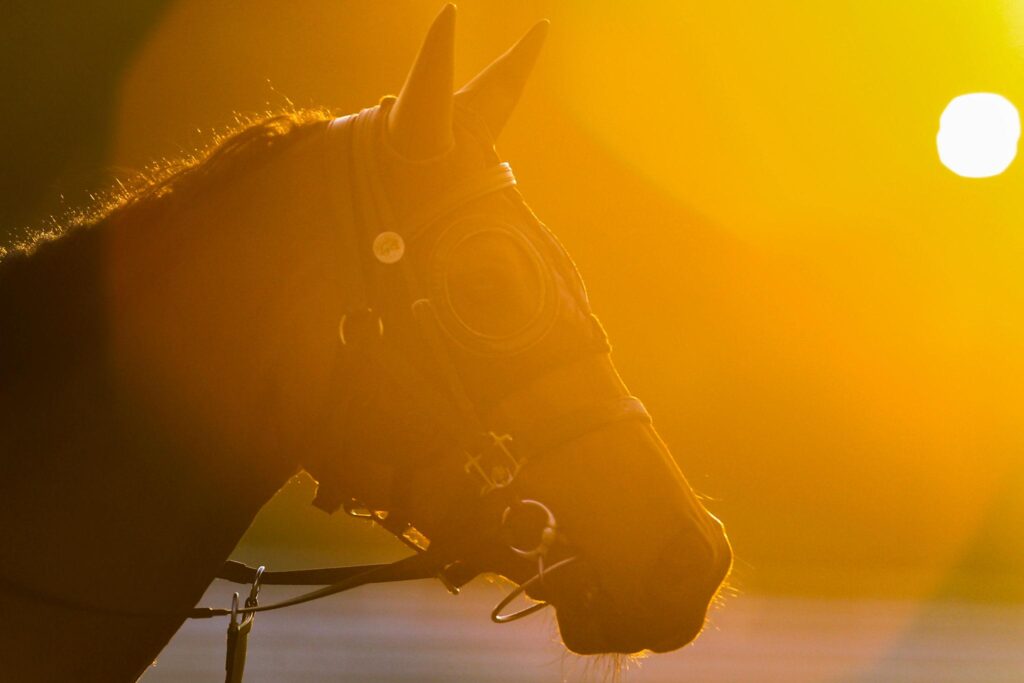
The Problem With Judging a Horse Too Early
Horse racing is built around potential.
Breeders look at bloodlines. Buyers examine conformation. Trainers watch movement. Owners study pedigrees and race records.
But no catalogue can perfectly predict what happens once a horse reaches the track.
A young thoroughbred can look awkward and still possess extraordinary athletic ability. Another can have an impressive pedigree but never become a serious racehorse.
That uncertainty creates one of racing’s greatest stories:
the horse everyone underestimated.
Phar Lap: Australia’s Ultimate Underdog
Few stories illustrate this better than Phar Lap.
When the future Australian icon arrived from New Zealand, he did not immediately look like a superstar. His large, gangly appearance reportedly left owner David Davis unimpressed. Trainer Harry Telford, however, believed in the horse’s bloodlines and arranged a three-year lease after Davis considered selling him.
Then came the racing.
Phar Lap lost his first race in February 1929 and initially struggled to establish himself. But his transformation was extraordinary. He eventually won 37 of 51 starts, including the 1930 Melbourne Cup.
The horse that had once looked like an unlikely prospect became one of Australia’s greatest sporting legends.
And his story became even more powerful because of when it happened.
Australia was suffering through the Great Depression. Phar Lap’s spectacular rise gave ordinary people something to believe in, turning a racehorse into a national symbol of hope.
The Moment Everything Changed
There is something fascinating about an underdog’s first major breakthrough.
Before it happens, people see weaknesses.
After it happens, those same weaknesses can suddenly become part of the legend.
Phar Lap’s awkward appearance became part of his story.
His early defeats became evidence of how far he had travelled.
His humble beginning made his victories feel even bigger.
By the time he won the 1930 Melbourne Cup, he was no longer an unknown horse. More than 72,000 people watched him at Flemington, where he carried a 62-kilogram handicap and won convincingly.
The transformation was complete.
The horse nobody expected had become the horse everyone was watching.
Not Every Underdog Is Born a Star
Modern racing provides similar stories.
Mr Brightside, for example, was bought from relative obscurity after finishing fifth in a 1400-metre maiden at Matamata. His early days were hardly those of an obvious future champion: trainer JD Hayes recalled average gallops, difficult behaviour and plenty of doubt about whether the horse would make it.
But something was there.
Eventually, the horse found his ability.
And once that ability emerged, the perception changed completely.
This is one of the most intriguing elements of racing: the difference between an ordinary horse and a great horse may not be obvious at the beginning.

The Underdog Doesn’t Have to Be Cheap
An underdog story isn’t always about a horse bought for almost nothing.
Sometimes the horse simply enters a race where nobody expects it to win.
That can be even more dramatic.
A heavily fancied favourite may have the pedigree, reputation and previous victories.
The outsider may have none of those advantages.
But racing isn’t decided by reputation.
It is decided on the track.
One good start.
One perfect ride.
One gap opening at exactly the right moment.
One extraordinary final 200 metres.
Suddenly the favourite is behind.
Why We Love the Outsider
There is a reason underdog stories are so powerful in horse racing.
Most people understand what it feels like to be underestimated.
A horse doesn’t know its auction price.
It doesn’t know whether experts predicted success.
It doesn’t understand that another horse cost ten times as much.
It simply runs.
And that makes the image of an outsider charging toward the finish line incredibly powerful.
The horse carries no awareness of the expectations surrounding it.
The humans do.
The People Who Believe First
Behind almost every great underdog story is someone who noticed something others missed.
It might be a trainer who sees an unusual stride.
A breeder who trusts a bloodline.
A stable worker who notices a horse’s attitude.
A jockey who feels something special underneath the saddle.
Or an owner willing to give the horse more time.
Phar Lap’s story is a perfect example of how important that belief can become. Harry Telford saw potential where others saw an awkward young horse.
Without that belief, the story might have ended before it began.
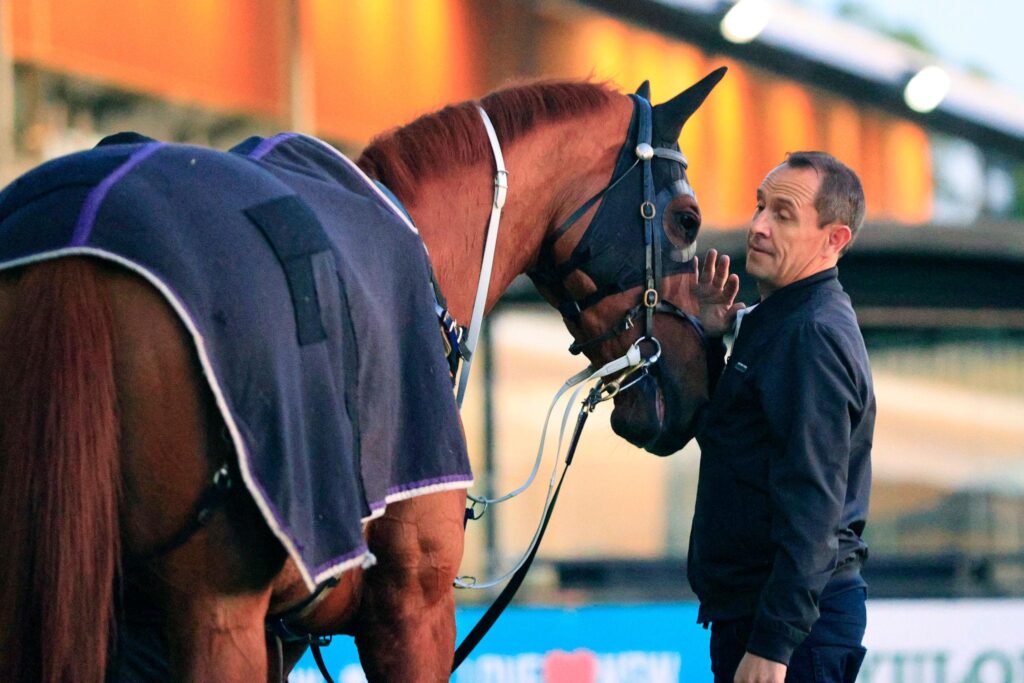
The Greatest Race Can Begin Before Race Day
This is what makes racing underdogs so interesting.
Their biggest victory often begins long before the crowd gathers.
It begins at a sale.
In a breeding paddock.
During an ordinary morning gallop.
After a disappointing race.
During a conversation where somebody says:
“Maybe this horse has something.”
That tiny moment of belief can eventually lead to a packed grandstand, flashing cameras and a horse crossing the finish line ahead of the field.
And Sometimes the Horse Writes Its Own History
Australian racing has repeatedly produced horses whose stories became larger than their race records.
Takeover Target is another remarkable example. Trained by former Queanbeyan taxi driver Joe Janiak, the bargain-buy sprinter eventually travelled to Europe and won the 2006 King’s Stand Stakes at Royal Ascot, becoming an important part of Australia’s international racing story.
Vow And Declare provided another version of the underdog story when he won the 2019 Melbourne Cup as the only Australian-bred, owned and trained runner in a field packed with international competition.
Different horses.
Different eras.
Different circumstances.
But the same basic idea:
Nobody gets to decide a horse’s destiny before the race is run.
The Next Underdog Is Already Out There
Somewhere today, a young thoroughbred is standing in a paddock.
Nobody knows its name.
Nobody is talking about it.
It has no famous victories, no championship trophies and no legendary photographs.
Perhaps it will never become a champion.
But perhaps a trainer will notice something.
Perhaps a jockey will feel something during a morning gallop.
Perhaps one day the horse will enter a race as an outsider.
And perhaps, when the gates open, it will begin the run that changes everything.
Because that is the greatest mystery of horse racing.
The next legend may not look like a legend yet.